
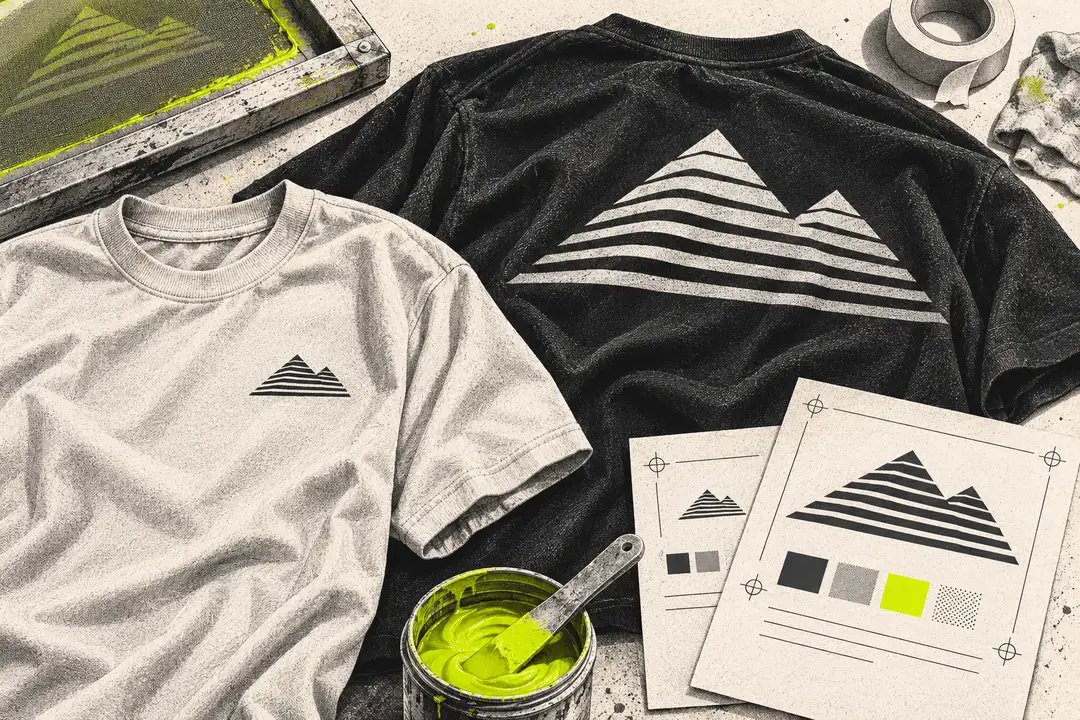
To compare screen printing quotes, give each printer the same garment style, size breakdown, artwork, and in-hand date. Then check that each estimate covers the same decorated garments, setup or artwork charges, and delivery. Compare the totals once both printers have confirmed the scope.
A quote for “100 shirts with our logo” can describe very different orders. Maybe it's a one-color logo on the front of a white tee. Maybe it's a small chest logo and a full back print on black tees, with half the order going to a second address. Here’s how to spot gaps in an estimate and send the printer a request that’s easy to price.
Start with the exact shirt
A “standard tee” can be a roomier work shirt or a lighter ring-spun tee for a retail table. Those are different products, even from the same brand. For example, S&S Activewear lists Gildan's 5000 Heavy Cotton tee at 5.3 ounces per square yard with a classic fit and its 64000 Softstyle tee at 4.5 ounces per square yard with a modern classic fit. Both styles offer colorways with different fiber blends. If you need a specific heather or safety color, check the specification for that color and confirm it comes in the sizes you're ordering. Gildan 5000 specifications and Gildan 64000 specifications.
If you’re choosing between two tees, ask for both quotes with the same art and size counts. Try on blank samples if you can. Give the printer your actual size mix, including extended sizes, so any size-specific charges show up in the total.
Fabric can affect the print itself. On certain polyester garments, dye can migrate into the ink and discolor it. A decorator may need to test the exact garment or use a different ink system, especially if you're putting a light logo on a dark performance shirt. Ask for that material to be quoted on its own terms, even if you already have a price for the same logo on cotton. Avient's performance wear printing guidance.
Count the pieces that share a print setup
Screen printing needs a setup before the first finished shirt comes off the press. In a typical spot-color job, the shop separates the art into ink layers, prepares the screens, and lines up the colors so they land in the right place. That work is easier to spread across a longer run. Price schedules can reflect the difference through quantity tiers, separate setup charges, or a combination. Vantage Apparel's trade rate sheet is one public example of a schedule that breaks out placement, color count, quantity, and setup. Ryonet's screen-printing process guide and Vantage Apparel's screen-printing rate sheet.
Here's the question to ask if your order has several products or versions. Which pieces qualify for the same quantity tier? If you're ordering 80 tees in one color with the same logo and 20 sweatshirts, tell the shop whether the art is the same size and whether you expect the same print placement. A new print size, a different garment construction, or a swap from black ink to white can change how the shop groups or charges for the job. The shared total on your order form only tells you how many pieces you need to hand out.
Ask for a second quantity only if you could actually use it. A cheaper unit price can still mean more money spent. If you need shirts for 90 crew members and expect five new hires, price a small reserve in those likely sizes and compare the order total with a later top-up. The specific sizes matter more than the number printed at the bottom of the box count.
Count colors and placements on the artwork
Start by writing out each place the artwork goes. A left chest logo and a back logo are two placements. If both use the same white ink, the shop still has two pieces of artwork to set up. The same mark at three inches wide for a chest and ten inches wide for a back is also two setups. A pocket, sleeve seam, or hoodie pouch can affect the usable print area, so call those out before the printer puts a placement in the quote. Vantage Apparel's placement and setup breakdown.
For straightforward spot-color art, the decorator usually prepares a screen for each ink color at each placement. A black-and-orange front logo on a white shirt may use the white fabric as open space. Switch the shirt to black and the same artwork may need a light ink layer beneath the orange to keep it bright. That first layer is called an underbase. You'll see the orange on the finished shirt, and the quote may charge for the extra layer separately or include it in the print price. Ask how the quote handles it. PRINTING United Alliance's guide to underbases and Vantage Apparel's screen-printing rate sheet.
A one-color white logo on a dark shirt deserves the same question. The production team may plan a base and a top white layer for the coverage you're after. Share the actual shirt color and art, and ask what the price includes for the approved result. This is especially helpful when you see “one visible color” in one estimate and a higher production color count in another. Ryonet's underbase guide.
Compare three versions of the same order
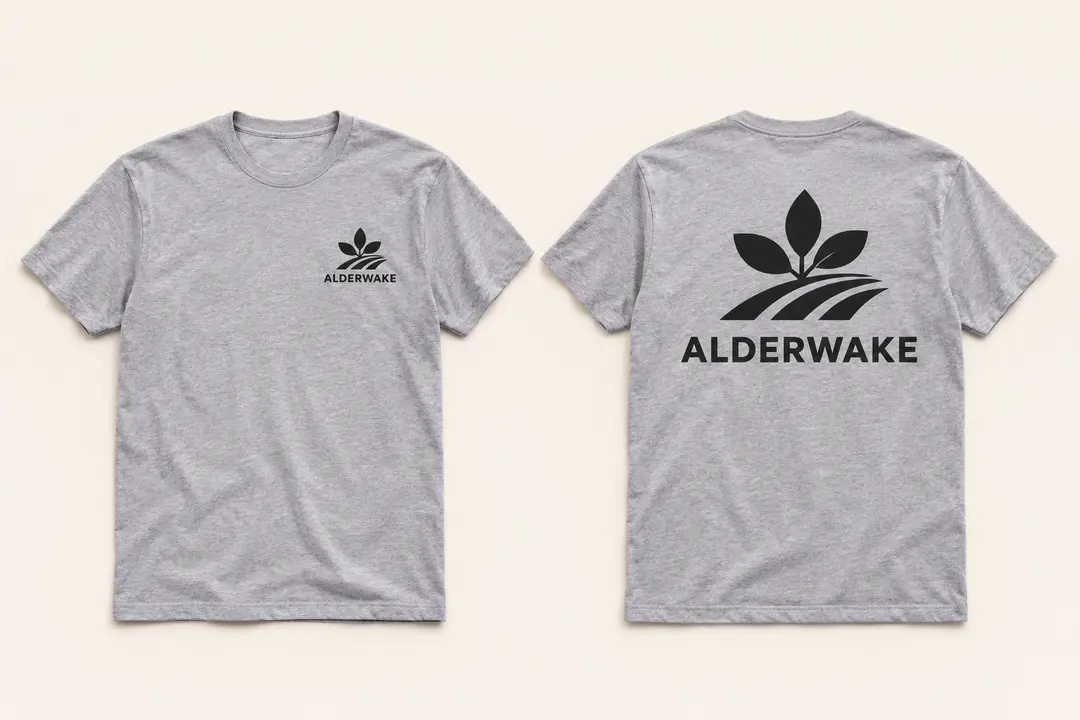
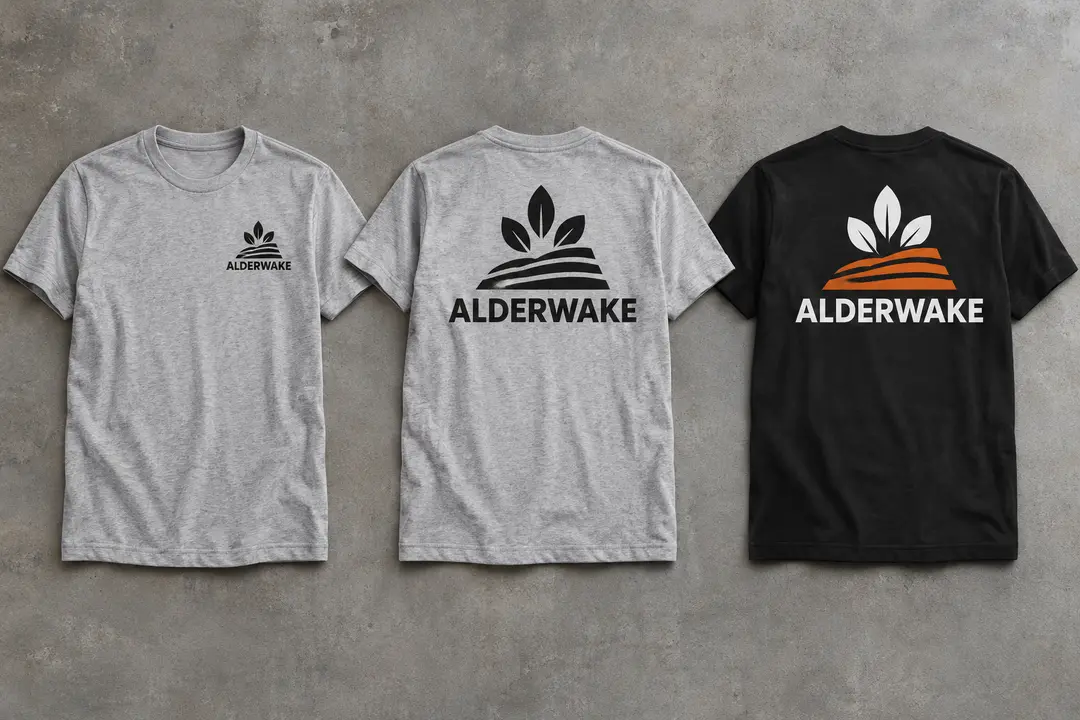
Say a commercial landscaping company wants 100 tees for its crew. It wants a small logo that works in customer-facing settings, and it's considering a large back print so the crew is easy to spot. Here are three quote options it could request, with the same garment model, size breakdown, and destination.
| Option | Garment and art | What you learn |
|---|---|---|
| A | Light gray tee, one black left chest print | The cost of the basic crew shirt |
| B | Light gray tee, black left chest and one-color black back print | The added cost of the second placement on the same garment |
| C | Black tee, white left chest and two visible colors on the back | The cost of the preferred look once the printer confirms ink layers and coverage |
Ask for the complete price at 100 pieces on each option. The difference between A and B isolates the effect of the back print in that example. The difference between B and C includes several changes at once. If you need to know exactly what adding a second back color costs, ask for a fourth version on the black shirt with the same one-color chest, holding everything else steady. This is also a good way to let a team vote on the shirt without asking the printer to price unrelated specifications.
Reconcile the two quotes line by line
Put both quotes next to your original request. Check the style number first. Then match the garment color, sizes, quantity, print placement and size, and artwork revision. Make sure both quotes assume the same delivery plan. An estimate for one bulk shipment can be a very different service from one that includes sorting, labeling, and deliveries to three locations.
For a like-for-like figure, divide the total for the same scope by the number of finished shirts. Include any charges you've agreed to count in both totals, such as setup, artwork, delivery, and applicable tax. If an item is still pending, mark it as pending. A line for “printing” could be decoration only. Likewise, a quoted unit rate may already include setup. Ask whether one-time charges apply again on a reorder and whether the next run would fall into a different quantity tier.
Imagine two quotes come back for Option B above. Quote A shows a finished-shirt line and a separate setup line. Quote B shows a lower unit rate and lists “1-color print,” but the placement and shipping are unspecified. The first thing to ask Quote B’s printer is whether the rate covers both the chest and back. A second question will tell you whether the rate includes the garment and setup. Compare delivered totals after both quotes account for the same destination and packing.
| Compare | Record on each quote |
|---|---|
| Garments | Exact style and color, quantity by size, and any size surcharges |
| Decoration | Each location, artwork revision, print width, and coverage or underbase |
| Setup and extras | Screen or art charges, proof or sample fees where applicable, and special packing |
| Delivery and total | Same destination, in-hand date, shipping, tax treatment, and order total |
Use one line per garment and artwork combination. Ask for any substitute tee as a separate option with its style number.
Give the shop an in-hand date and the delivery ZIP code. The date you want boxes on site could be earlier than the public event date. If staff are sorting sizes or packing kits, leave time for that work. Ask the printer which dates need to be met for art approval, final quantities, and any sample approval. Confirm whether rush production or expedited shipping is part of the price and which delivery assumptions could change if an approval slips.
What to send for an accurate screen-printing quote
- Shirt style and color. Include the brand and style number if you've picked them. If you want help, describe who will wear the shirts and what you'd like the fabric and fit to feel like.
- Quantity by size and version. Break out each garment, color, and artwork variation. Include the total, so the printer can check the math.
- Artwork for each placement. Label files by front, back, or sleeve and include your target print width if you know it. Flag any brand colors that need to be matched.
- Delivery and packing. Include your in-hand date, destination ZIP code, and any sorting or packaging requirements.
- The variable you want to compare. Ask for the same quote with one change, such as a different tee, a back print, or a second quantity.
Send original artwork when you have it. A vector logo scales cleanly, and a high-resolution source image may be appropriate for artwork that started as a photo or painted illustration. A PDF can contain either vector or pixel-based art, so share the original file if the only PDF you have was made from a screenshot. If the print is meant to look distressed or has very fine type, point that out when you send it. You can settle whether fine details need adjustment before approving the proof. Adobe's guide to raster and vector files.
What if you need more shirts later?
Save the garment style and color, art version, print widths and placements, final ink colors, and the approved proof. When you reorder, tell your printer what's the same and what needs to change. Confirm stock, the new size mix, and setup or delivery changes. If a garment is unavailable, ask for the replacement style's measurements and fabric before accepting the change.
If you're ordering for a crew, an event, or a merch drop, send Strange Planet Printing the size breakdown you have and the decision you're still weighing. We can help you choose a garment and compare print options on the same request. See our Boston screen-printing services or get a quote.